Archive for May, 2009

Tyson

Sunday, May 17th, 2009

James Toback’s 2008 documentary Tyson isn’t a documentary in the true sense of the word.

For 90 minutes, viewers get to hear Mike Tyson’s story as told by Iron Mike himself. Through Tyson’s uniquely high-pitched lisp, we hear about how he was the the fat kid who got picked on in grade school, the misguided teenager who spent his free time participating in home invasions, and the older teen who, under the direction of boxing legend Cus D’amato, channeled his anger into his boxing training. All of these stories are complimented with photographs and video clips.

We also get to hear about “the leeches” that Mike surrounded himself with: Tyson briefly talks about Desiree Washington (the 18-year-old he was convicted of raping) and his ex-wife Robin Givens, while saving his most biting criticism for former promoter Don King.

Who we don’t hear from is, well, anybody else. We never get to hear from Washington, Givens, King, or anyone else from Tyson’s past. We don’t hear much about the $300 million dollars Tyson squandered, or his series of arrests due to DUIs and drug possession. To hear Mike tell it, he was the greatest fighter of all time who only lost fights because he spent the previous night having sex, and reigned until he got tired of the sport and quit.

Tyson sets out to paint the infamous boxer as a life-long victim while downplaying his own victims. If you want to hear Mike Tyson’s version of history from his own lips, this documentary delivers. If you’re looking for a more fair and balanced view of historical events, you might keep looking. If nothing, Tyson gives viewers a look at how Mike Tyson perceives the world. While Mike’s story may be depressing, his view of history is probably the saddest thing of all.

Back to the Future Trilogy

Thursday, May 14th, 2009

I was twelve years old when Back to the Future first hit theaters in 1985. It was two years after Return of the Jedi had been released, so the timing was right for a new trilogy of films to dig into America’s culture. Along with Indiana Jones and Star Wars, Back to the Future would do on to become one of the most popular movie trilogies of all time, and is now the first of those trilogies to appear on DVD. My fascination with BTTF started very early; I remember seeing the first film two or three times in the movie theater. Later, when the movies came out on home video, I really became infatuated with the trilogy. As a kid, I never noticed that Marty leaves the “Twin Pines Mall,” runs over a pine tree, and returns to the “Lone Pine Mall.” Once I discovered that, I became even more hooked. I must’ve watched the film 20 times on home video, trying to find different interesting things the writers had hidden in the scripts.

The Back to the Future trilogy has been one of the most anticipated DVD releases since the format was introduced. Rumors circulated that the movies were going to be released in 1998… and then, 1999. Then 2000. Then 2001. Finally, word hit the net that the elusive movies would appear for Christmas of 2002. After almost five years of waiting, the BTTF DVD box set appeared under my Christmas tree this year. After spending three days already knee deep in the extras in this box set, I can definitely say the DVDs were worth the wait.

Let’s talk about what you get right up front. All three Back to the Future flicks have been remastered here for 5.1 sound, and the movies sound great. Scenes with special effects, like the DeLorean jumping through time or lightning striking the clock tower really stand out. Films two and three take more advantage of the rear speakers, while the first mainly uses it for effects. The movies have also been reprinted, and are cleaner now than ever. The trilogy is available in either full screen or letterbox formats — and yes, for those who haven’t heard, movies two and three aren’t really in letterbox, they are just full screen versions with black bars matted over the top and bottom. Replacement discs will be available for free in February, so feel free to buy it now.

So, let’s talk about Disc 1 first, which contains the first film, Back to the Future. Christmas day, I watched the film. 90 minutes. Afterwards, I watched “The Making of Back to the Future”, a featurette from the 80’s, and “Making the Trilogy: Chapter One”. Both together lasted a little over an hour. Then I watched the film again, with the “Q&A” feature turned on. It’s basically like a commentary track, but with director Robert Zemeckis and producer Bob Gale answering questions in front of a college film audience. After that, I watched the film three more times — once with the “enhanced Michael J. Fox conversation” feature turned on (similar to the white rabbit option on The Matrix), once listening to the feature commentary with producers Bob Gale and Neil Canton, and once with the “Did You Know That?” feature turned on, which turns the movie into a “Pop Up Video”-like experience. For those of you keeping count, that’s approximately 8 and a half hours of video, which doesn’t include deleted scenes, outtakes, makeup tests, production picture archives, original screenplay excerpts, trailers, production notes, recommendations, and other small bits and pieces. You can easily kill half a day with this one disc.

If you have ever had any question about Back to the Future, it most likely is answered somewhere on this DVD. From “why did they use a DeLorean as a time travel machine” to “why are there two backwards 9’s in the air when the DeLorean gets hit by lightning and gets shot into the past,” every second of this film is covered in documentaries and commentaries. “Why was Eric Stoltz dropped and Michael J. Fox hired to replace him?” “Why did Crispin Glover not return for parts II and III?” Questions fans of the movies have been asking for years are all answered here in one nice little package.

Disc II of the boxset continues the time travel goodness with Back to the Future II, my favorite of the series. Again, aside from a new transfer and a 5.1 remix, viewers get even more “making of” documentaries, another Q&A commentary, another feature length commentary, another pop-up video sttle anecdote feature, PLUS production designs, storyboards, “Designing the DeLorean,” “Designing Time Travel,” hoverboard test footage, evolution of visual effect shots, production archives, trailers, production notes, recommendations, a Huey Lewis & the News video, and more. Some information from some of the sources overlap each other, but as with the first disc, no stone is left unturned on this DVD.

Back to the Future II had some awesome special effects, particularly ones that included several Michael J. Foxs on screen at the same time. In the “Evolution of Special Effects” feature, you can see several scenes without the special effects, and then watch them slowly be added. With this, plus all the little (and big) extras tucked away on this DVD, you can easily kill a second day with this one. Even non-fans of the film will find themselves peeking around and checking out features. The hoverboard test footage is awesome, as stunt doubles “fly” around the California desert as they work the kinks out of the system. You can see the harnesses and the rigs holding the actors, and it still somehow seems like magic.

Disc III contains Back to the Future III. Again, we’re treated to the two different commentary tracks as well as all the other extra segments. A ZZ Top music video appears, as well as two other cool features. One is “The Secrets Behind Back to the Future”, an old telelvision program starring Kirk Cameron, reading questions written in by fans and answering them on screen. The other feature I liked was the “Back to the Future FAQ”, which answers the most asked questions about the trilogy. By this time in the viewing, most of these questions have been answered elsewhere, but it was still interesting to read. One of the questions is, “are hoverboards real?” and the producers answer that this is one of the most common questions they get asked, still to this day.

It would take you basically twelve hours to watch all the extras on each disc. At three discs, that’s a day and a half straight of watching Back to the Future. Besides all that extra goodness, you also get THE MOVIES! Even without all the extras piled on, $40 for 3 classic films is an awesome deal — hell, I’ve paid more for bad movies in the used bin. More than once. Plus, as I said, on TOP of the movies, you get every possible Back to the Future factoid known to man. Did you know the amplifier Marty McFly plugs his guitar into in Doc Brown’s lab is labeled “CRM-114”, which is also the name of the decoder in Stanley Kubrick’s Dr. Strangelove or: How I Learned to Stop Worrying and Love the Bomb, as well as the serial number of the Jupiter explorer in 2001: A Space Odyssey?

This is the Back to the Future collection. Every extra, every cut scene, every tidbit of information is preserved here, all in one nice, complete box set. I don’t see how they can release a special edition after this one, folks, everything you could possibly want is here. I hope those responsible for the eventual Star Wars and Indiana Jones DVD boxsets take note — Universal has set the bar pretty high with this one.

Bridge to Terabithia

Thursday, May 14th, 2009

Bridge to Terabithia, based on the 1997 novel by Katherine Paterson, is a touching story about two children, both social outcasts, who together escape their daily struggles by visiting the imaginary land of Terabithia. In this pretend world, Jesse and Leslie reign as the King and Queen and spend much of their time fixing up their castle and battling imaginary creatures. The movie is an emotional tale and a terrific film. My only complaint is that the films marketing is completely misleading (more on that later).

As the only boy among five children, Jesse Aarons (Josh Hutcherson, from RV) just doesnt fit in. His love of art conflicts with his fathers (Robert Patrick, Terminator) hard working blue-collar ethics. His days are spent being tormented on the bus by 8th graders and being picked on by his classmates. His hopes of proving his mastery of, well, anything (in this case, a foot race) are dashed when new-girl-in-school Leslie (AnnaSophia Robb, Violet from Charlie and the Chocolate Factory) beats all the boys. Leslie is no social butterfly herself; her unique clothing style alienates her from her classmates, and her parents are authors who lock themselves away for days on end working on fiction novels. The two social misfits quickly become friends, spending their after school hours exploring the woods behind their home an area that the two dub Terabithia.

In this new imaginary land, Jesses bullying classmates become evil critters to be fought, and Leslie imagines dragonflies as a hoard of friendly warriors. Eventually, the twos imaginations are no match for reality. When a major character within the film dies, the scope of the film changes dramatically and this is where my complaint about the films marketing begins.

Those who have seen the trailer (like myself) imagine Bridge to Terabithia to fall somewhere between The Wizard of Oz and Narnia; however, the trailer is intentionally misleading. Although the overwhelming majority of the movies commercials show the imaginary land of Terabithia, no more than fifteen minutes of the film take place there. In fact, the wide-angle, cinematic shot of the Castle of Terabithia actually appears in the films closing shot!

I do think Bridge to Terabithia is a fantastic film. That being said, I also feel like the victim of the old bait-and-switch technique. Had I known the true subject, scope and situations presented within the film, I would have taken my wife to see it instead of my five-year-old son Mason. While theres nothing particularly inappropriate for a young child to see, chances are the majority of the films themes will go directly over their heads, leaving them pining for more of the imaginary place the trailers promised us.

Or, as Mason put it as we were leaving the theater, Daddy, did we just see the right movie?

Braindrainer

Thursday, May 14th, 2009

The titular Braindrainer from Michael Legge’s low-budget horror film of the same name is an alien life form from outer space disguised as a rock and delivered to Earth by a meteor. As people touch it, their brains are reduced to the size of a raisin and they instantly become comatose.

When the Braindrainer actually leaps into Senator Rick Vapid’s head, the race is on to find a cure. Dr. Belinda Garland, for which the alien meteor has been named (“Garlandite”), must team up with the brilliant but blind (and ironically named) Matt Retina if they hope to save the Senator’s life and find a way to fight the Garlandite. They’ll also have to defend themselves against The Amazing Jacques (Legge), a hypnotist who intends on stealing the Garlandite and turning the masses into his brainless slaves. Jacques has enlisted help from Spiderwoman and her creepy assistant, The Creeper. It’s all very silly, lighthearted, and entertaining.

Braindrainer actually made me laugh (or at least smirk) more than once. Legge’s jokes are more entertaining than the film’s low budget lets on. More than just simple one-liners or crude cusswords, Legge does a good job at presenting some real honest-to-goodness jokes within his dialogue and sets up some funny situations throughout his film (the reporters leading the blind scientist around in circles cracked me up).

Like most low budget films, the lack of funding is apparent through the film’s audio and editing (which may have been done on videotape). According to information I found via the Internet, a re-cut DVD edition of Braindrainer appears to have been released. My copy came from the Dollar Store and included a second movie on the disc, so I have to assume I ended up with the older, rougher version.

Braindrainer is an example of low budget horror filmmaking done right. Michael Legge, who according to his IMDB biography works as a United States postal employee when not making films, has a good eye for comedic timing and political satire. If you can overlook the normal issues that plague most low dough shows, Braindrainer is an entertaining take on the horror-meets-science-fiction genre.

Brain Candy

Thursday, May 14th, 2009

I like the Kids in the Hall. I thought their show was funny, and when I heard their feature length movie Brain Candy was coming out on DVD, I looked forward to seeing it. Unfortunately, I also like Saturday Night Live, and have been burned by one too many unfunny SNL movies. Three minute ideas often become painful ten-minute skits, and excruciatingly long 90-minute films.

Kids in the Hall: Brain Candy falls into the same trap. With no one telling the guys what works, what doesn’t, what should be more developed and what should be cut, the guys spend their hour and a half of screen time throwing everything they have at the screen, seeing what sticks. Unfortunately for us, very little does.

Brain Candy tells the “story” of a group of research scientists working for Roritor, Inc, who discover a pill that cures depression. Due to pressure from the company’s CEO, they decide to release the drug on the world, sans any major testing. The drug switches from being a prescription-only medication to an over the counter pill, and soon the entire world is without depression. Unfortunately for Roritor, a minor side effect is discovered — some of the drug’s users are left in a coma, with their brains stuck in their happiest memories. The scientists must regroup and discover a cure.

The first ten minutes is spent parading cameos of characters apparently from the KitH television show. They never reappear, and their appearances are pointless to the plot. Halfway through the movie I kept wondering if any of those characters would ever reappear, but they never do.

I’d file Brain Candy under those movies that made me chuckle a few times, but not one that I’d call “funny”. When the scientist meets “Cancer Boy,” their conversation ends with a long, awkward pause which made me offer up a “heh,” but my grin was gone long before the scene ended. It’s jokes like this where the guys could use some directorial guidance — the joke might sound funny on paper or on the set, but while watching the movie it just doesn’t go over big. Oh, and half the movie’s jokes revolve around men playing women, so if you don’t find that hilarious, you’ll find yourself sitting around and not laughing like myself. Guys in drag, got it, saw it on the show, saw it here. Not really that funny anymore.

Some of the biggest jokes in the movie come when you actually get to enter people’s heads and see what their happiest (and later, saddest) memories are. Big surprise when the old lady’s memories revolve around her son and grandkids visiting, or when the gay man’s remembers fond memories of bootcamp. Sure, they had minor funny moments, but they all seemed to just go for the obvious. Only Mrs. Hurdicure’s saddest memory was something slightly original, which ended up being one of the funniest moments in the film.

The film does seem to make a few jabs at society, particularly in the directions of corporate America and the use of medications in society. While I got it, I really don’t go looking to Canadian comedy troupes for deep mental stimulation either. If they were counting on those references to carry the movie along, it failed.

As only a casual fan of the television show, I don’t know if there were a bunch inside jokes I just didn’t get, or if no one watching the film got them. A commentary track might have filled me in, but that’s one extra that didn’t make it to the DVD. Actually, no extras made it to the DVD. If this DVD had any fewer extras, it would be called a VHS tape. Chapter selection and subtitles are the only features found here.

If you’ve ever watched the KitH television show, you know that some of their skits work, and some don’t. Brain Candy seems like a bunch of strung together skits that for the most part, don’t work. If I saw this in a bargain bin for $5 I might pick it up, that’s about all I can say for it. A string of mediocre jokes from people that I normally find very funny.

Big Lebowsky, The

Thursday, May 14th, 2009

Written and directed by the Coen brothers (Fargo, Raising Arizona, O Brother, Where Art Thou?) The Big Lebowski tells the story of Dude Lebowski (Jeff Bridges), a peace-loving hippy who is mistaken for the titular millionaire Lebowski. Because of the mistaken identity, a couple of ruffians end up trashing his house, roughing up the Dude, and relieving themselves on his rug. That act of urination begins a chain of events that will leads the Dude and his friends into a twisted adventure.

After a meeting between the two Lebowskis, the Big Lebowskis trophy wife Bunny (Tara Reid) is kidnapped, and Dude is chosen to relay the ransom money to the kidnappers. The Dudes pal Walter (John Goodman) comes up with another plan, and by the time the plot begins unraveling you (and everyone else in the movie) will be wondering just whose side the Dude is on.

The Big Lebowski consists of a decent plot with several twists and turns, but relies heavily on character actors for its entertainment. Steve Buscemi, Philip Seymour Hoffman, and Julianne Moore all put on interesting performances, which like a magician, divert the audiences eyes away from the pretty unbelievable plot. In that aspect, The Big Lebowski stands more as a character study than a true narrative.

The Big Lebowski plays like a cross between the Coen brothers two most successful films prior to this one by using plot twists like Fargo and interesting characters ala Raising Arizona. It often plays as if it were written by the Dude himself, as so many of the films points, thoughts, and ideas never seem to go anywhere in particular and just when things do begin moving along, someone comes along and clobbers the Dude in the noggin, sending him into yet another musically-inspired acid flashback.

Like Napoleon Dynamite, the most enjoyable thing about The Big Lebowski is that everyone either knows someone like the Dude, or was/is the Dude. In fact, most of the characters in The Big Lebowski are generic and recognizable enough (especially the Dudes circle of friends) that youll probably recognize either yourself or someone else in the group. If youre more into laughing than analyzing plots and like the Coen brothers unique style of comedic characters, youll dig The Big Lebowski.

Beyond the Mat

Thursday, May 14th, 2009

Finally The ROCK has come BACK to DVD. And to you, all the millions AND millions, of wrestling fans out there, THIS is the disc you have been waiting for. And if your DVD player wont play this disc, maybe the Rock can help you by coming over, turning that S.O.B. sideways, and sticking it straight up your candy ass!

All wrestling shtick aside, Beyond The Mat is THE must-own movie if you are a fan of the current world of professional wrestling. The movie takes strides to show the human side of wrestlers — their relationships, their joy, and their pain. By doing this, the movie opens up professional wrestling to a much larger audience.

Barry W. Blaustein, both a filmmaker and a fan of professional wrestling, decided to make a movie about the real lives of wrestlers. In an anecdote told during the beginning of the film, he relates a story where as a child he went to a professional wrestling match. After the match was over, he saw a professional wrestler get into a car and drive away with his family. This was the incident that made him realize that professional wrestlers were real people too. Inspired by this memory, Blaustein spent five years recording over 60 hours of documentary footage. Blaustein edited the footage down to a 102-minute documentary, and added insightful narration to the entire thing. The final product is Beyond The Mat.

The DVD release of Beyond The Mat is unrated. The original theatrical release was R-rated, due to violence and language. Some of the wrestlers made some extremely negative comments (mostly against the WWF) in their on-camera interviews. Although these comments were cut out of the theatrical release, the comments were reinserted into the home release. Its difficult to find what was reinserted back in because its not marked and I didn’t see the theatrical release, but from what I could find on the Internet, the theatrical version was 102 minutes, and this version clocks in at a little over 107 minutes.

The majority of the film follows three wrestlers — Mick Foley, Terry Funk, and Jake “the Snake” Roberts — over the past few years of their careers.

Beyond The Mat goes beyond wrestling by delving into their personal lives and relationships, showing the real side of professional wrestling, and the human side of the wrestlers. Its interesting how Jake the Snake is presented as the past of wrestling, Terry Funk as the current hero of wrestling, and Mick Foley as the future. Shortly after the movie was released, Mick retired from wrestling, and Terry Funk, who retires from wrestling in the movie, came back from retirement. Jake the Snake well Jake the Snake is still wrestling for $25 a show and smoking a lot of crack, both of which he does on camera as well.

My wife, who thinks there is something wrong with grown men wearing masks, tights, and rolling around with each other on television, loved the movie. She really liked the behind-the-scenes footage, seeing the wrestlers wives, their kids, and all of the drama in their personal lives. I liked all that, but being a fan of professional wrestling, I also liked seeing the wrestlers I had forgotten about years ago (Koko B. Ware??) and seeing where they are now. My wife liked all the home footage of people like Mankind out on the beach playing with their kids, out of character.

If you think the biggest excitement for wrestlers is in the ring, think again. This movie choked me up at least three times: once when Mick Foleys kids ended up watching their daddy take 14 shots to the head with a metal chair; once when Terry Funk decides to give up professional wrestling; and once when Jake the Snake has a reunion with his estranged daughter. Actually the majority of the Jake the Snake portion of the film had me torn up a bit. Watching someone sink so low after being a celebrity is pretty depressing stuff.

To quote the production notes, Beyond The Mat is an honest, uncensored, sensational behind-the-scenes look at wrestling. It takes the viewers beyond the ring and into the lives of the men and women who inhabit this colorful, competitive and surprisingly complex world. The personal and professional struggle is the core of Beyond The Mat. Tough to top that. Beyond The Mat is a fascinatingly real look behind the scenes at a sport that doesnt seem real. If youre the type of guy who likes to find out how they do special effects in movies, you should enjoy this. It goes without saying that any fan of wrestling, whether it be ECW, WCW, or WWF should definitely check this disc out. Also, if youre a wrestling fan who has a spouse who is not a wresting fan, this could be the one to win them over.

Compared to me and my friend Stephen watching scrambled wrestling Pay Per Views on cable and trying to figure out what is going on, the video looks great! All kidding aside, it does look really good. And got a much better transfer than I figured a film of this genre would. It really seems like they spent a lot of time and effort on the transfer. I didnt see any added digital noise. The movie itself was shot in both 16mm and video to give it a, for lack of a better word, documentary type look. The audio has also received more special treatment than I thought it would. For example, when they are driving through some of the suburban areas, the voices stay in the front channel, while nature noises (birds, crickets, etc) can be heard from the rear– nice touch! Several of the wrestling events in the show also have crowd noises pumped throughout the rear of the room. Another professional job. One pet peeve is my Pioneer player wouldnt let me switch audio tracks on the fly, which is something I can usually do.

The main reason I wanted to get this disc was for the extras. This disc certainly does not disappoint. First of all you get a Cast and Filmmakers, which shows pictures of the main wrestlers featured in the movie and a little blurb about each one. You probably know everything in here if you watch wrestling.

Next you get Production Notes, which talks about the making of Beyond The Mat. It has a few pictures taken from the movie and maybe 5 or 6 paragraphs about the project. Most of the information is repeated in other places on the disc.

The third extra you get is the Theatrical Trailer. The last extra, Feature Commentary, contains some cool stuff. The movie comes with two separate commentary tracks one with the director Barry W. Blaustein, and a second with both Blaustein and Terry Funk. Then there are two shorter commentaries by Mick Foley. One is where Foley talks over his 8 minute segment in the film titled On My Life In Wrestling, and another one is a 20 minute segment where he talks over The Royal Rumble video. The weird thing is that the movie is basically wrestling footage with commentary track over it, so this is like a commentary track on top of a commentary track. Some of the information is repeated and there are some longer than average lulls, but there is a TON of information here to be gathered. While some of the other extras on the disc reek of filler material, the feature length commentaries will keep you watching this disc for a while especially if you have wrestling buddies.

If youre a wrestling fan, definitely pick this title up. It not only shows a lot of the inner workings of professional wrestling, but it also shows the human side of these characters that we dont normally get to see. We get to see Terry Funks daughters wedding, along with many other personal moments of these guys lives. We get to see both up-and-coming and down-and-out wrestlers. The movie itself is addictive, and the added commentary tracks just add another layer of information to be soaked up. My wife found the movie interesting, but I wouldnt say addictive. She enjoyed the relationships and personal drama more than the Japanese barbed wire wrestling clips shown. Still, we both watched and enjoyed it. I cant wait until the next pay-per-view I plan on having the guys over and having a Beyond The Mat viewing party to kick it off.

Beware: Children at Play

Thursday, May 14th, 2009

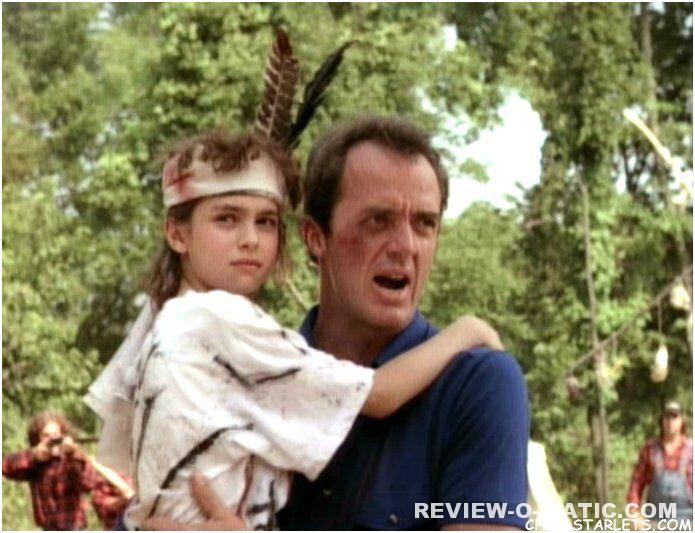
In 1996, prior the debut of Tromeo and Juliet at the Cannes Film Festival, Troma aired the trailer for Beware! Children at Play. According to legend, half the audience walked out.

In a brief extra included on the DVD, Mik Cribbin, director of Beware! Children at Play, explains how the film came about. Cribbin was hired as a cameraman on a horror film that was cancelled before shooting began. With money, investors, and special effects already lined up, Cribbin pitched one of his own scripts, and the rest was history. Cribbin mentions in the feature that he had never made a motion picture before. If you have seen Beware! Children at Play, you already suspected this.

Beware! opens with Professor Randall and his son Glenn camping in the woods. (A lack of acting skill runs in the family.) Other than dad’s penchant for singing songs about mythological creatures to his son around the campfire, the pair seem relatively normal. The camping trip takes an unexpected turn when dad steps in a bear trap, falls, and hits his head. Unable to free himself from the trap, Glenn is sent back to the campsite for food and water. Dad’s plan is to wait until someone discovers him in the woods, but after three or four days in the trap, dad begins to ramble incoherently about demons and goblins and maggots before eventually succumbing to his wounds. Young Glenn proceeds to do the only rational thing and cuts his father open with a hunting knife before eating his guts.

This is five minutes into the film.

Time passes, and we soon meet happily married John and Julie, and their cute daughter Kara. The nicest family in the world is on their way to Uncle Ross’s house. During their trip, the family stops to assist a travelling salesman whose car has broken down. While John looks at his car, the salesman, through ten solid minutes of exposition, explains that the nearby townsfolk are inbred, and that at least a dozen kids have recently come up missing. Once the exposition ends, John fixes the car and his family drives away. Moments later, “someone” murders the travelling salesman by cutting him in half. “Travelling salesmen” belong to a demographic you can still safely kill in a horror movie without too many complaints.

When John and his family arrive at Uncle Ross’s house, they discover Ross’s daughter Amy is one of the teens that has gone missing. This leads to even more boring dialogue, where Ross explains that one local child goes missing every other month. When John (a pulp fiction author) asks Ross why local authorities haven’t looked into the disappearances, we learn that Ross is actually the local sheriff, and is out of ideas. Ross has invited John because he “thinks he might know a mind reader or something.” (Who doesn’t?) During a confusing series of dead end plots, another local, Dr. Fish, arrives and the three men put their heads together in an attempt to solve the disappearances.

When another child goes missing, the sheriff holds a press conference where only one member of the press shows up. With no leads to follow, the three men decide hiring a psychic is their best bet. A psychic is brought in, and our protagonists give her a doll that belonged to one of the children. The psychic follows the doll’s “vibes” into the woods (alone), where she discovers the missing children! This is a happy reunion for ten seconds until the little munchkins begin to jab her in the legs with sharp sticks. Once on the ground, the kids slit her throat and eat her face, while chanting “Gulp the blood, gobble the flesh, tear her to pieces,” over and over.

Meanwhile, Sheriff Ross, John the Author, and Dr. Fish begin receiving push back from the “Brownies” — no, not junior Girl Scouts, but crazy, cult-like locals who live in the woods. The group is referenced roughly twenty times in a two-minute span, so even the densest of viewers know to take note.

The three musketeers of crime fighting go from interview to interview, trying to crack the case. John, who reveals to the group that he believes he has ESP, takes the investigation reigns from the sheriff. While interviewing one crazy local, John spies a car under a tarp. The car belonged to the travelling salesman, and has blood on it.

“What does it all mean?” asks the Sheriff.

“How did you get to be sheriff?” asks the viewers.

At the beginning of the third act, it is not John, but his wife Julie who cracks the case. Julie, a “high school literary teacher,” remembers that the phrase the murderous children were chanting included “alliteration.” She remembers the line came from the ancient story, Beowulf. In Beowulf, the monster, who was also a cannibal, was named Grendel. Remember the cannibalistic kid from the beginning of the film? Glenn Randall? G.Randall? Grendel? Oh boy, this is thin. And I mean, this is the SINGLE CLUE that cracks the case! When the cops look up Professor Randall’s file, they discover “he taught Anglo-Saxon.” Case closed, in my book.

The investigation can’t move fast enough. John’s wife Julie is killed, and Ross’s wife is kidnapped. “And now, it’s personal,” says John, implying that everything up until this point wasn’t personal. John and Ross arrive to confront the children, but the townsfolk have other plans — namely, to violently attack and kill the mob of children on sight.

The race is on. Can John the Psychic Author and Ross the Sheriff find the kids before the angry mob of townsfolk? No. The sheriff’s lawn enforcement background is no match for the dozen children, and he is quickly dispatched. While the children are working on the sheriff, John discovers Amy, hopes in the travelling salesman’s car, and attempts to escape!

(Major spoilers below.)

Grendel, now an older teen, attacks John for attempting to steal his “queen.” John defeats Grendel, and leaves in search of his daughter (who has been kidnapped during the melee). Just as he finds and rescues his own daughter, the townsfolk arrive and attack the children. When John informs the mob that anyone touching one of the children could be charged as “accessories to murder,” he receives a bullet to the forehead. Then, the slaughter begins.

One child is stabbed in the neck with a pitchfork. One gets a hatchet in the back. One takes a meat cleaver to the head. One is crushed with a 2×4. One gets an arrow to the chest. One gets a shotgun to the head at point blank range. One takes a machete to the chest. One has a pistol inserted into his mouth before the trigger is pulled, spraying blood on a piece of wood behind him.

After all the children — their own children — are killed, the townsfolk go home.

The final two minutes of film appear almost as news footage, with still shots of all the dead kids. (Well, not really still shots, most of them are breathing.) At the very end, John’s youngest daughter (who survived the attack by hiding under her father’s dead body) emerges with a knife as she prepares to cut and eat one of the victims. THE END!

Beware! Children at Play isn’t just disturbing — every part of it is awful. I can only assume that this was the first and last acting job for every person appearing in the film. The writing is awful; exposition is presented in huge dialogue dumps, and facts that might seem important (“Oh, I think I’m psychic!”) are buried. There’s no character arc for anyone in the film, no lesson, and no development of any kind. Its only redeeming quality is the shock value that comes from watching it with a friend.

Bedazzled

Thursday, May 14th, 2009

Isn’t it odd that people in movies never act like people in real life do?

In Bedazzled, Elliot Richards (played by Brendan Fraser) is a geeky tech support employee who runs into Satan HERself (Elizabeth Hurley) at a local club. Elliot only has one wish in life, which is to be united with Allison, the girl of his dreams (Frances O’Connor), but in exchange for his soul, Elliot is granted a total of seven.

None of his wishes are limited in length or stipulation. Elliot is also handed a pager and is told if he dials ‘666’, his wish will be canceled and he will return to our “present” reality. How bad could it get, right?

Pretty bad.

The Devil is not in the business of letting people live happily ever after. Anyone who’s ever seen any of the classic Twilight Zone episodes (The man who was granted immortality gets a life sentence in prison, the man who gets all the books in the world to read breaks his only pair of reading glasses, etc) will know exactly what to expect. The Devil shoots holes in each of Elliot’s wishes by reading between the lines and giving him a little something extra each time.

Elliot’s first wish seemed pretty good to me: he wished to be rich, powerful, good looking, and to be married to Allison. POOF, he gets his wish! Unfortunately, he has become a rich, powerful, good looking COLUMBIAN DRUG LORD, married to an unfaithful Allison. OOPS.

Right about here is where I started getting irked with the movie. In the midst of gunfire, Elliot dials his way out of that wish and, instead of being MORE specific in his following wishes, he becomes LESS specific. Some of his other wishes include stuff like, “I wish I were an NBA basketball player.” Huh? Plenty of room for error there. When Elliot wishes he were the President of the United States of America, the Devil turns him into Abraham Lincoln, about ten minutes before he is shot.

You would think that at some point Elliot would just wish, “I wish my life were just like it is today, except I was happily married to Allison and she were happily married to me. Nothing else would change. Oh, and each time I open my wallet, there would be a new, non-counterfeit, spendable $100 bill there.”

Seems pretty easy to me, but instead Elliot runs around like an idiot wishing he were “the world’s most sensitive man” (who gets beat up by bullies on the beach) and “a well spoken gentleman who the lady’s adore” (they sure do – and so do the men, the Devil made him gay).

Not that I am a big religious person (or a small religious person, for that matter), but I thought I had seen the diety related-cinematic low point when I saw Alanis MOrrisette as God in Dogma. Her casting seems brilliant compared to the gangster in prison who plays God in Bedazzled. If God created us in his/her image, then God looks a lot like Coolio I’m thinking.

I’ve done a lot of rambling about Bedazzled, and not a lot of reviewing, so here’s my short review. Each of the wishes play out like short Saturday Night Live skits – which actually works out okay. None of the skits would make interesting full length movies, but at five to ten minutes each they’re all bearable. The ended totally sucked, and absolutely reeks of “hey guess what this movie is getting to long so let’s end it right now”. Elliot signed a contract thousands of pages long, but happens to wish for “just the right thing” that gets him out of the contract. Likely. This isn’t some sleeze ball attorney here, it’s the DEVIL. HELLO? MR. HORNS??? Pretty easy to fool for being the Prince of Darkness and all that good stuff.

For what it was, Bedazzled is not a bad film. The biggest problem with SNL type films is they take a 5 minute sketch and stretch it into 90 minutes, which almost never works. However, by taking several shorter skits and linking them together, Bedazzled never bores you to death with any one sketch.

If nothing else, the flick is good for sitting around with your buddies and wishing that Elizabeth Hurley will take off her clothes.

PS: There’s an alternate wish that got cut from the film which is hidden on the DVD. In the cut wish Elliot becomes a rock star that seems to be mostly Ozzy Osbourne, with a little Sid Vicious thrown in. There’s plenty of sex, drugs, and rock and roll in this scene, which is why it was cut – to keep the movie at a PG-13 rating instead of a R-Rating, which this scene surely would have done. It’s unfortunate that it was cut, it’s the funniest of the bunch.

PPS: The snake/outfit combo that appears on the cover never appears in the movie.

BBS Documentary

Thursday, May 14th, 2009

I was ten years old back in 1983, the year my father put his first Bulletin Board System (BBS) online. To this day I can still remember sneaking into the living room in the middle of the night and watching users navigate their way through his menu system. It seemed like magic back then to think that someone sitting in the comfort of his or her own home could connect to our own home computer simply by using a telephone line.

Throughout the 80s and half of the 90s, BBSs were THE place for computer users to meet, talk, and exchange ideas, information, and programs. It was the birth of online culture. Those who didnt call BBSs could never understand the idea of talking to and making friends with people you had never met in real life before. The BBS world had its own culture, customs, and even language. And yet after a run of almost fifteen years, BBSs virtually disappeared overnight, submitting to a new technology — the Internet.

BBS: The Documentary tells the complete story of BBSs, starting with the birth of the first one in 1978 and ending with their demise. If it sounds dry, it isnt; the story is told by people who were there over 200 of them, in fact. For four years, amateur filmmaker Jason Scott traveled thousands of miles interviewing users, SysOps (System Operators, the people who ran BBSs) and many of the movers and shakers of the BBS scene. The material was then grouped by subject and divided up into eight separate episodes, all of which are included in the three-disc set.

Each of the eight episodes average forty minutes in length. As you make your way through the episodes, youll quickly notice that the documentary focuses on people over technical details. As the details of the first BBS are unveiled, youll get to meet the people who created it, and the circumstances surrounding the event. And for the technical historians out there, the segment ends with the inventor of the first BBS digging it out of the back of his closet and showing it to the camera. In fact, many of the people appearing throughout the DVDs are a virtual whos who of computer history. Its literally thrilling to see peoples names pop up as theyre speaking. As one man speaks, a title slowly appears at the bottom of the screen. Vinton Cert, Co-Creator of TCP/IP. Vintage computer fans will recognize many of the interviewees contained within: creator of Punter protocol Steve Punter, infamous hacker Cheshire Catalyst, several members of the counter-culture group The Cult of the Dead Cow, Atari collector and historian Curt Vendel, and dozens more. While not all of the people interviewed are famous, they all have interesting stories to tell.

The discs and episodes follow a logical chronological progression. The first disc contains two programs: Baud, which chronicles the beginning of the BBS, and Sysops and Users, featuring stories from both points of view. The second and third discs contain three episodes each. Disc two contains Make It Pay (the rise of the BBS industry), FidoNet (the BBS Network that Changed Everything) and Artscene (the history of the BBS art world, with interviews from several members of Ice, Acid, and Titan). Disc three consists of HPAC (the world of Hacking/Phreaking/Anarchy/Cracking boards), No Carrier (the end of the BBS) and Compression (the ARC-ZIP battle). Watching all three discs in one setting is probably too much for even the most hardcore hacker. Fortunately, each episode stands on its own so they set can be watched at your own pace.

In addition to the five and a half hours of episodes, there are an additional 80 minutes of bonus footage sprinkled across the discs. Most of these clips are short anecdotes that would of slowed the pace of the documentary, but were still good enough to include and are enjoyable to click through. The third disc of the set is also a DVD-Rom disc which, along with the episodes mentioned, also contains thousands of photos taken throughout the authors journeys, and a few audio speeches in MP3 format.

If you spent any amount of your youth calling BBSs, these DVDs will instantly take you back 20 years. I heard so many stories that I could relate to during these episodes that it was almost like sitting around a campfire, listening to old friends share stories about the good old days. Jason Scott has done a superb job of capturing the passion and excitement of the BBS era and presenting that to viewers. BBS: The Documentary is both informative and entertaining. Those who were there will watch the episodes constantly grinning and nodding, while those who werent will listen to the stories in awe. My wife, who is decidedly non-technical, enjoyed the documentary almost as much as I did. At one point during the program, she turned to me and said, Who knew there were people out there just like you? Highly recommended to everyone even remotely interested in computers and technology.

Originally submitted to TheLogBook.com